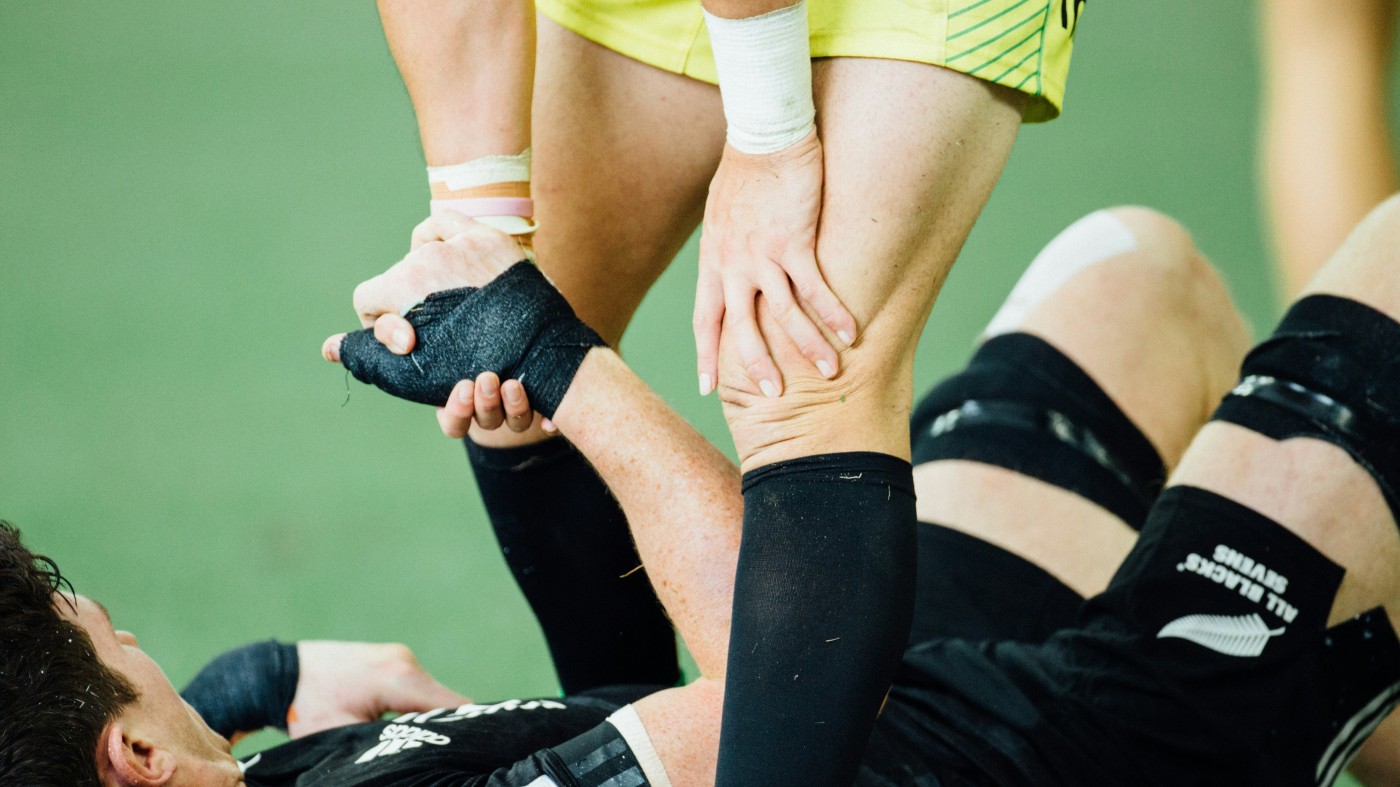
I have felt the moment a bad injury makes you wonder, in the quiet of a hospital corridor, whether you will ever play again. I feared the worst, I did the long rehab, and I came back and played on, but I never forgot what that fear showed me about how exposed a footballer’s finances really are.
If you are reading this while nursing a serious knock, or you are simply honest enough to know it could happen to you, this is written for you. Not to frighten you, but to hand you the plan I wish every young player carried in their back pocket long before the tackle that changes everything. A career can be taken from you in a single afternoon, and even if it is handed back, the exposure it reveals should change the way you plan from that day forward.
Why Every Career Plan Should Assume It Ends at 27
Most players quietly plan around the career they hope for. They picture playing into their mid-thirties, a testimonial, a gentle wind-down, and money arriving steadily the whole way. It is a lovely picture. It is also a gamble, because the average professional career is short and it does not end on a schedule of your choosing.
The single most useful mental shift you can make is to plan as if the career ends at 27, not 34. Not because it will, but because if your finances are built to survive an ending at 27, they will comfortably survive one at 34. Plan the other way around, assume the long career, and an early ending leaves you stranded.
Here is what planning for 27 actually looks like in practice:
- You treat every contract as possibly your last, and you save hard during it rather than spending against the next one.
- You keep your fixed costs, the mortgage, the cars, the lifestyle, at a level a sudden drop in income could still carry.
- You build the bulk of your long-term security in your best earning years, because you cannot assume there will be more of them.
- You measure success not by the wage you command now, but by what would still be standing if football stopped tomorrow.
This is the heart of treating your peak earning years as the whole story rather than the opening chapter. The players who finish comfortable are rarely the highest earners. They are the ones who acted, early, as if the music might stop mid-song. An injury is simply the most brutal version of that ending, arriving without notice and without asking whether your finances were ready.
None of this means living like a monk or refusing to enjoy what you earn. It means the enjoyment sits on top of a plan, not in place of one. A player who has quietly secured the downside can spend the rest with a clear conscience, because a bad scan will not undo him.
{{INSET-CTA-1}}
The Emergency Buffer an Injury Puts to the Test
Every financial plan talks about an emergency fund. In football, that phrase is not a nicety, it is the thing that stands between you and panic on the day the physio’s face tells you it is serious.
A cash buffer is money you can reach quickly, held in plain, accessible savings, that could cover your life for a stretch without relying on your next appearance fee, your next bonus, or your next contract. For most people, an injury is an inconvenience. For a footballer whose income can be tied to appearances, availability and a contract that may not be renewed, a long lay-off is the exact moment a buffer earns its keep.
Think about what a serious injury actually does to your money:
- It can remove appearance-related and bonus income while your outgoings carry on exactly as before.
- It can arrive in the final year of a contract, when a club deciding your future is watching your fitness closely.
- It can stretch for months, well beyond anything a normal rainy-day fund was built for.
- It can hit at the worst possible time, just after you have committed to a bigger house or a longer financial obligation.
That is why a footballer’s buffer needs to be deeper than the standard advice you will read online. The usual rule of thumb, a few months of expenses, is written for people in stable salaried jobs. Your income is lumpier and your career is shorter, so your buffer should be built to carry you through a genuinely long absence, not a fortnight off with a cold.
Where the buffer sits matters too**.** Keeping large sums in cash means understanding how your money is protected. The Financial Services Compensation Scheme protects £120,000 per person per authorised firm, and banks that share a single banking licence share one £120,000 limit between them, so spreading a big cash balance across genuinely separate institutions is worth understanding. There is also temporary high-balance cover of up to £1.4m for up to six months, which can apply just after an event like a house sale. If you are holding a serious buffer in cash, that is exactly the sort of detail worth checking rather than assuming.
The buffer is not glamorous. It earns you no bragging rights in the dressing room. But on the day an injury turns your world upside down, it is the difference between making calm decisions and making desperate ones. Desperation is expensive. It is what makes a player accept a bad deal, cash in something at the wrong moment, or borrow against a recovery that has not happened yet.
Protecting Your Income Without Betting on a Product
Once you have seen how quickly an injury can interrupt your earnings, the natural next question is whether you can insure against it. The honest answer is that income protection and insurance can play a role, but this is exactly the kind of area where you should never act on a general article alone.
Let me be clear about what I am and am not saying. As a concept, income protection is designed to replace part of your earnings if you cannot work, and there are forms of cover built around injury and loss of earnings. For a professional whose whole livelihood depends on a body that can be damaged in a single challenge, the idea of protecting that income is worth taking seriously. That is the general principle, and it is a sound one to explore.
What I will not do is pretend it is simple. Whether any cover is right for you, what it would actually pay, what it excludes, and whether it even fits a professional athlete’s situation, all depend entirely on your circumstances and the specific terms on offer. Sports careers sit awkwardly with a lot of mainstream cover, and the detail is everything. This is a specialist area, and cover must be arranged with proper, qualified advice, not chosen off the back of a teammate’s recommendation or a paragraph in a guide.
A few honest principles are worth holding on to:
- Insurance is a tool, not a plan. It can protect against a specific risk, but it does not replace savings, a buffer, or a broader financial structure.
- The details decide everything. What is covered, what is excluded, and how a policy treats a professional athlete’s injury can vary enormously, and outcomes depend on your exact situation.
- It must be arranged with advice. This is not a place for guesswork or for copying what worked for someone in a different sport, at a different club, on a different contract.
- It sits alongside, not instead of, the rest. The buffer, the disciplined saving and the long-term plan all still matter, whether or not any cover is in place.
There is a separate, detailed guide elsewhere that walks through the specifics of protection and cover properly. This article is deliberately not that. The point here is simpler and more personal: an injury exposes how much of your future rests on your fitness, and the responsible response is to sit down with someone qualified and look at every way of shoring up that exposure, of which insurance is one part among several.
Do Not Bet Everything on Making It Back
When you are injured and the surgeon talks about a timeline, every fibre of you wants to believe in the comeback. You should believe in it. That belief is what gets you through the lonely months of rehab. But belief in the recovery is a mindset for your training, not a strategy for your money.
I have watched players pin their entire financial future on making it back to exactly where they were. They keep the big mortgage, the expensive commitments and the lifestyle intact on the assumption that the wage will return in full and on time. Sometimes it does. Often it does not, or it comes back smaller, at a lesser club, on a shorter deal. And by then the commitments have run on for months with no income behind them.
Planning wisely does not mean giving up on the comeback. It means refusing to bet everything on it. In practice:
- Keep your financial commitments at a level that survives even if the recovery is slow, incomplete, or leads to a smaller contract.
- Do not borrow against, or spend in advance of, an income that depends on a return you cannot guarantee.
- Treat the buffer as the thing that funds the recovery period, so you are not forced into bad decisions while you heal.
- Have a quiet, honest plan for the version of events where you come back at 80%, not just the one where you come back at 100%.
This is where building a plan that outlasts the game itself stops being a slogan and becomes real. A player who has structured their finances so that they do not depend on the comeback can throw everything into rehab with a free mind, because their family’s security is not riding on the scan results. A player who has bet the house is carrying two injuries: the one to their body and the one to their peace of mind.
There is a hard truth underneath this. The odds of a career in the first place are slim, with studies suggesting only around 1% of under-9 academy players and around 4% of teenagers reach the top tier. If you have made it, you have already beaten long odds once. Do not let an injury force you to gamble your security on beating them a second time. Build the plan that holds whether or not you make it back.
The Mental Side of a Long Lay-Off
Money is only half of what an injury takes. The other half is harder to see and harder to talk about, and pretending otherwise helps nobody.
A long lay-off does something to your sense of who you are. One week you are part of a squad, with a routine, a purpose and a place. The next you are on the outside, watching training from a treatment table, cut off from the rhythm that has defined your whole adult life. The uncertainty of not knowing whether you will return, and the loss of the identity that came with playing, can weigh as heavily as any physical pain. That is not weakness. It is human, and it is common.
If you are living through this, a few things are worth holding on to:
- You are more than your fitness. The identity hit is real, but the person underneath the player is still there, and that person has a future whether or not this recovery goes perfectly.
- Uncertainty is the hardest part. Not knowing is often worse than bad news, and it is exactly when structure and support matter most.
- You do not have to carry it alone. Talking to people you trust, and to professionals, genuinely helps, and reaching for that support is a sign of strength, not the opposite.
- Support exists that is built for you. Both the English PFA and PFA Scotland provide member support services, and they are there precisely for moments like this, not only for crises.
I want to be plain about that last point. If the weight of a lay-off is getting heavy, speak to someone. That might be a partner, a trusted teammate, a family member, or a professional who does this for a living. The PFA’s member support services exist for exactly this, and using them is simply good sense. The players who come through long injuries best are almost never the ones who bottled it all up. They are the ones who let people in.
There is a financial dimension to the mental side too, and it is worth naming. A great deal of the fear that comes with an injury is money fear, dressed up as something else. When you know your buffer can carry you, when you know your commitments are not going to collapse, when you know you are not betting the family home on a comeback, the psychological load lightens. A sound financial plan will not heal your knee, but it removes one of the largest sources of anxiety at the worst possible time, and that is not a small thing.
The Same Reality in Rugby and Every Contact Sport
Football is far from the only sport where a single moment can end a career, and if anything the lesson lands harder in the collision sports.
Rugby is the clearest example. It is a brutal game on the body, careers can be short and injuries severe, and the same financial logic applies with even more force: plan as if it ends early, build a deep buffer, do not bet everything on the comeback, and look after the mental side of a long lay-off. A rugby player whose whole plan assumes a full career into their thirties is taking the same gamble as a footballer, in a sport that hands out serious injuries more freely.
The principle stretches across every contact and high-injury sport:
- In any collision sport, the risk of a sudden, career-altering injury is baked into the game, so the financial plan has to assume it.
- Athletes in individual high-injury sports carry the same exposure, often without the cushion of a squad and a club around them.
- Wherever the body is the asset, the buffer, the discipline and the honest planning matter more, not less.
What differs between sports is the detail around the edges. Footballers have the English Professional Footballers’ Pension Scheme, funded by a club levy and unique to their game, while other athletes build their retirement provision through the standard pension and savings framework. The wrapper changes. The underlying truth, that a body can be injured and an income can vanish, does not. Whatever your sport, if your livelihood depends on staying fit, this plan is written for you too.
{{INSET-CTA-2}}
Recovering Does Not Remove the Lesson
Here is the part I feel most strongly about, because I lived it. I came back. The injury I feared would finish me did not, and I played on for years afterwards. And it would have been the easiest thing in the world to exhale, decide the danger had passed, and go back to planning as if I were invincible.
That would have been a mistake. Recovering does not remove the lesson. It underlines it.
Coming back from a serious injury teaches you something no amount of good advice can: that the thing you assumed was permanent, your fitness and your career, was on loan the whole time. You got it back once. There is no promise you will get it back a second time, and the next one might arrive with less warning and worse timing. The recovery is not proof that you are safe. It is a reprieve, and a reprieve is meant to be used.
So if you are lucky enough to be reading this on the other side of an injury, back in training and feeling strong, use the fright well:
- Keep the deeper buffer you wished you had when you were laid up.
- Keep planning as if the next injury could be the one that does not heal.
- Keep your commitments at a level a future absence could survive.
- Take the money fear you felt and turn it into a structure, so you never feel quite that exposed again.
The scare was a gift, however little it felt like one at the time. It showed you the truth about a football career while you still had years left to act on it. The worst outcome is not the injury itself. It is surviving the injury and learning nothing from it, then being caught out again later with none of the protections that fright could have prompted you to build.
How Professional Planning Support Actually Fits
Plenty of players hear the word adviser and picture someone trying to sell them a policy off the back of their fears. That is not what genuinely useful support looks like. Here is how it actually fits around the risk we have been talking about.
- It starts with your exposure, not a product. A proper conversation begins with how dependent your income is on your fitness, and works out from there.
- It builds the buffer deliberately. Good support sizes your cash reserve to a real footballer’s career, not a generic rainy-day rule written for someone with a steady salary.
- It treats insurance as one tool among several. Protection and cover are discussed as concepts to explore with proper advice, never as a magic fix, and always alongside savings and structure.
- It plans for the version where the comeback is slow. Sensible planning stress-tests your commitments against a long lay-off, so a bad scan is a setback, not a catastrophe.
- It takes the mental side seriously. Removing money fear is part of the job, and pointing you toward support like the English PFA or PFA Scotland’s services is part of looking after the whole player.
This is why serious players often seek a conversation, not a product.
The Soft But Decisive Next Step
You do not need to overhaul your whole life this week, and you certainly do not need to make a fear-driven decision while you are still shaken. You just need to take one honest look at how exposed you would be if your fitness were taken away tomorrow.
- I would rather you knew your buffer could carry a long lay-off than hoped it might.
- I would rather you understood your protection options with proper advice than guessed at them or ignored them.
- I would rather you planned for a slow comeback than bet everything on a fast one.
- I would rather you reached for support early, from people you trust and professionals who can help, than carried the weight alone.
If any of that lands, the sensible next move is a short, private conversation to map your own exposure and the ways to shore it up. No pressure, no fear-selling, just clarity about where you stand and what would still be standing if the worst arrived.
Final Takeaway
This is not about expecting the worst, and it is not about playing with a knot of anxiety in your stomach every time you go into a tackle.
It is not about fear. It is not about insurance as a product. It is not about assuming your career will end early or that your comeback will fail. And it is not about carrying the mental weight of a lay-off on your own.
It is about the fright I described at the start, the hospital-corridor moment when a career suddenly looks fragile, and what that fright is trying to teach you. It is about planning as if it could all end at 27, so you are safe if it does and comfortable if it does not. It is about a buffer deep enough to carry a real injury, commitments light enough to survive one, protection considered properly with advice, and a mind supported through the uncertainty rather than left to cope alone. And it is about taking every one of those lessons with you even after you recover, because the recovery does not remove them, it proves how badly you needed them. Use the scare well, and it becomes the best financial advice a career ever handed you.