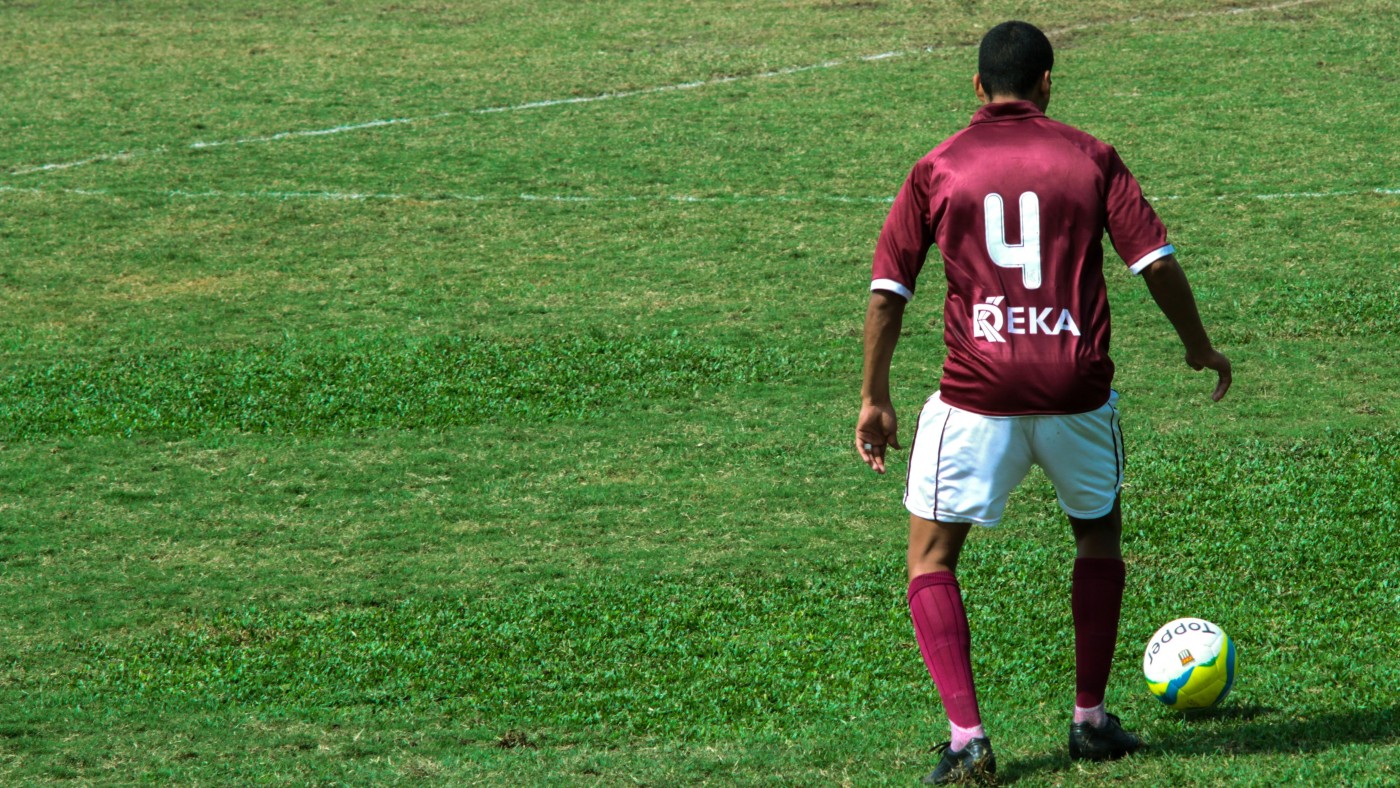
Every young player in an academy shares the same picture in their head: walking out at a packed stadium, your name on the back of the shirt, a career in the game stretching out in front of you. The hard number sitting behind that picture is this: research on academy systems suggests only a very small fraction of players ever reach the top, and the overwhelming majority never make a living from the game at all.
That is not said to flatten your dream. It is said because the smartest thing you can do, right now, while you are chasing it as hard as you can, is build money habits that serve you whether or not the game pays you a wage. If you make it, those habits protect the money. If you do not, those same habits are the difference between a bumpy few years and a life knocked off course. Either way, you win by starting now.
This is a piece about the basics. Not investing, not anything clever. The things that work on any income, from a part-time job at sixteen, to a first professional wage if it comes, to whatever you earn in whatever life you build after football. And though this is written with football in mind, everything here applies just as squarely to a young rugby academy player, a tennis hopeful grinding through junior tournaments, or a teenager on a golf pathway. The odds are long in all of them, and the money basics are identical.
The Numbers Nobody Puts on the Academy Wall
Let us start with the reality, because everything else grows from it. Previous Premier League research indicated roughly 1% of the under-9s who enter academies go on to play in the top tier. A study that followed teenage academy players found only around 4% reached the top tier of professional football, with a few per cent more making a living in the lower professional divisions. Read those numbers slowly. They are not there to scare you off. They are there to make you honest with yourself.
Here is what that means in plain terms:
- Most players who are in an academy today will not earn a full-time living from the sport.
- Being released is not a rare tragedy, it is the normal outcome, and it says nothing about your worth as a person.
- The players who do make it often still have short careers, and short careers end while you are still young.
- The same shape of odds applies in rugby, tennis and golf, where thin pathways and injuries close doors just as quickly.
None of that is a reason to train less hard. Chase it with everything. But chase it with your eyes open, and build a financial base that stands up whichever way the game breaks for you. The players who cope best with being released are almost never the ones who were most talented. They are the ones who kept a life, a plan, and a few sensible habits alive alongside the football.
The Trap of I Will Sort It Out When I Am Rich
There is a story a lot of young players tell themselves, and it goes like this: money is boring, money is for later, and once the big contract lands I will pay someone to deal with all of it. It sounds reasonable. It is actually one of the most expensive beliefs you can hold, and here is why.
First, for most players the big contract never lands, so later never arrives, and you reach your twenties having never learned how money works. Second, for the small number who do sign well, money habits do not magically switch on the day the wage does. If you have spent years spending everything you have, you will spend everything you have when the numbers get bigger. The habit scales up, the discipline does not appear from nowhere.
The truth is the opposite of the story. The best time to learn money is when the stakes are low. Learning to budget on £100 a week teaches the exact same skill you would need on £10,000 a week. A mistake made with small money is a cheap lesson, while a mistake made with big money can follow you for life. Players who understand money before it arrives are far harder to take advantage of when it does, and good habits practised for years become automatic, so they hold up under pressure, temptation and bad advice.
Think of it the way you think about your game. You do not wait until the first team to learn how to control a ball or track a runner. You drill the basics for years so that when the moment comes, you do not have to think. Money is no different. You are building the muscle now.
{{INSET-CTA-1}}
Budgeting: The Habit That Works on Any Income
Budgeting has a dull reputation and it does not deserve it. All a budget really is, is a plan for your money before the month spends it for you. It works on any income, and it is the single habit that underpins every other good thing you will ever do with money.
Start with something simple. For whatever money comes in, whether that is board money, a part-time wage, a scholarship allowance or a first pro contract, split it in your head into three jobs:
- Money for the things you have to pay, the essentials that keep your life running.
- Money you set aside before you touch anything, so a share is always saved.
- Money you are genuinely free to enjoy, guilt-free, because the first two jobs are done.
The exact split matters less than the order. The mistake almost everyone makes is spending first and saving whatever is left, which is almost always nothing. Flip it around. Decide what you save and what you must cover, then spend what remains. This is the whole game, and it never changes no matter how big the numbers get.
A few habits make budgeting real rather than theoretical:
- Know roughly what comes in and what goes out each month, actual numbers, not a vague feeling.
- Give every bit of income a job before it arrives, so nothing drifts away unaccounted for.
- Keep a small buffer for the unexpected, because the boots, the phone screen and the car always break at the worst time.
- Review it every so often, because your income and your life will change and the plan should move with them.
Do this on a modest income now and you will do it instinctively later. That is the point. You are not budgeting because you are poor, you are budgeting because it is what people who keep their money actually do.
Saving a Share, Every Time, Before You Spend the Rest
If you take one habit from this whole piece, take this one: always save a share of what you earn before you spend anything. Not what is left at the end. A share off the top, every time, on any income.
Why it matters so much:
- A pot of savings is what turns a disaster into an inconvenience, an injury, a release, a broken-down car.
- Money set aside buys you time, and time is what lets you make good decisions instead of panicked ones.
- The habit of paying yourself first is worth more than the amount, because the habit is what lasts a lifetime.
- Saved money quietly buys you freedom, the freedom to say no, to walk away, to wait for the right move.
You do not need a big income to start. You need a small habit repeated. Saving even a little from a part-time wage now teaches you the exact behaviour you would need to protect a professional wage later. And there are sensible, general places designed to help ordinary savers, including tax-efficient savings accounts with an allowance of £20,000 per tax year, which most young people will never get near but which show that the system rewards people who save in the right places. You do not need the detail now. You need the habit now.
One more thing worth saying plainly. If you ever do sign a professional deal and start to earn well, the same rule holds, just with more zeros. Learning how to make a modest wage stretch across a whole life is a skill that starts with the very first share you ever save, not with your first big cheque.
Tax Exists, and Understanding That Now Saves You a Shock Later
Nobody expects a sixteen-year-old to be a tax expert, and this piece is not going to turn you into one. But there is one idea that will save you a nasty surprise one day: the money you earn is not all yours to spend. The government takes a slice, and it is better to know that now than to find out the hard way.
In England, Wales and Northern Ireland, everyone gets a personal allowance, currently £12,570, that you can earn before income tax starts. After that, the basic rate is 20% up to £50,270. Scotland sets its own bands, so the exact figures differ north of the border, but the principle is the same everywhere. Most young players on modest wages have their tax taken automatically through PAYE, straight from the wage before it reaches them, so there is nothing complicated to do.
The simple lessons to carry:
- The number on a contract or a wage slip is not the number that lands in your account.
- When you think about what you can afford, think in terms of what arrives after tax, not before.
- Tax is normal, everyone pays it, and it is not something to fear or dodge, just something to plan around.
- As earnings grow or become less regular, tax gets more complex, and that is the point where proper advice earns its keep.
That is genuinely all you need to hold onto at this stage. Tax exists, it comes out before you get paid on a normal wage, and the amount you can actually spend is the after-tax amount. Keep it that simple for now.
Spending to Impress Is the Fastest Way to Go Backwards
This is the one that gets more young players in trouble than any tax rule or savings mistake ever will. The watch, the car, the clothes, the round of drinks, the trainers before anyone else has them. The pull to look the part is huge in a dressing room, and social media has poured petrol on it. It is worth understanding exactly what is going on, because once you see it you can step around it.
Spending to impress does three quiet, damaging things. It drains the money that should be building your safety net into things that lose value the moment you own them. It sets a lifestyle you then feel you have to maintain, which locks you into needing money you may not keep earning. And it signals to the wrong people that you are an easy source of money, and those people find you fast.
Here is the part nobody tells you in the moment. Nobody who matters is counting your possessions. The people who genuinely respect you, teammates, coaches, family, real friends, respect how you train, how you carry yourself, how you treat people. The stuff impresses strangers and drains your future. Quiet security beats loud status every single time, and the players who understand that young are the ones still comfortable years later.
A useful test before any big spend:
- Am I buying this because I want it, or because I want to be seen with it?
- Would I still buy this if no one would ever know I had it?
- Is my safety net sorted first, or am I spending money that has a more important job?
- Could this decision, if I make it every month, quietly become a lifestyle I cannot afford?
You do not have to live like a monk. Enjoy your money, that is what the third job in your budget is for. Just do not let impressing people you do not know cost you the security you will one day be very glad you kept.
Keep Your Education and Your Plan B Alive
Given the odds we started with, this might be the most important section in the whole piece. Your education and your options outside football are not a betrayal of the dream. They are the thing that catches you if the dream does not pay out, and the safety net that lets you chase it without fear.
The players who handle release best almost always have one thing in common. They kept something else alive, schoolwork, a qualification, a trade, a genuine interest, a plan for what else they might do and be. It does not make you less committed on the pitch. If anything, a player who is not terrified of the future often plays with more freedom, not less.
Some straightforward ways to protect your plan B:
- Take your education seriously even when football feels like the only thing that matters, because grades and qualifications keep doors open.
- Notice what else you are curious about or good at, and let those interests breathe alongside the sport.
- Build relationships and habits outside football, so your whole identity is not resting on one uncertain outcome.
- Treat being released, if it comes, as a change of direction and not the end of your story, because plenty of successful lives started exactly there.
This applies right across the sports. The young golfer whose game plateaus, the tennis player whose ranking stalls, the rugby academy lad who does not get the senior contract, all of them are far better placed if they kept learning and kept their options open. Planning early for the possibility of the summer you get released is not pessimism, it is exactly the kind of grown-up thinking that makes the whole journey less frightening.
{{INSET-CTA-2}}
Why These Good Habits Protect the Few Who Do Make It
Everything so far serves you if the game does not pay out. Here is the flip side, and it is just as true: these same habits are exactly what protect the small number who do make it big. The headlines are full of players who earned fortunes and had nothing to show for it a few years after they stopped. That almost never happens because they earned too little. It happens because nobody taught them the basics before the money arrived, and the habits never existed to catch it.
A professional career, even a good one, is short. The money has to do a strange job: it has to pay for the years you are earning and help carry the far longer stretch of life after you stop. That only works if the habits are already in place.
There is one thing that is football-specific and worth knowing, because it is a rare piece of good news built into the system. Players who actually sign a professional contract are auto-enrolled into the game’s pension scheme, a defined-contribution scheme funded by a levy the club pays, around £7,200 per player per year as of August 2025, and importantly it is not taken out of your wages. It is a genuine benefit, but notice the two catches. It only exists for footballers, and it only starts once you actually sign a professional deal, which, as we have seen, most academy players never do. Rugby, tennis and golf hopefuls have no equivalent handed to them at all. So it is a nice backstop for the few, never a plan for the many, and never a reason to relax about the habits.
The habits that protect a big wage are the boring ones you are building now:
- Living on less than you earn, so there is always a gap being saved rather than spent.
- Keeping a safety net, so a bad season or an injury does not force a bad decision.
- Understanding that tax and short careers make the real, spendable number smaller than it looks.
- Staying grounded about status, so lifestyle does not swallow a wage that has to last.
Read that list again. It is the same list as for a player on £100 a week. That is the whole secret. The basics do not change with the size of the wage. The players who keep their money are simply the ones who learned the basics before the money, and never stopped using them.
How Professional Planning Support Actually Fits
At some point, if your earnings grow or become less predictable, the basics you have built will need proper, personal help layered on top. That is not a failure of your own discipline, it is the natural next step, and it is worth understanding what that support actually is and is not.
- Not a sales pitch: good planning support starts with your situation and your goals, not with a product someone wants you to buy.
- Not just for the rich: the habits and the thinking matter most before the money is big, which is exactly when good guidance shapes the years ahead.
- A second set of eyes: someone whose job is to see the whole picture, the tax, the short career, the what-ifs, so you are not working it out alone.
- A translator: turning confusing rules and jargon into plain decisions you actually understand and control.
- A protector of your future self: helping today’s choices serve the person you will be in ten and twenty years, not just this month.
This is why serious players often seek a conversation, not a product.
The Soft But Decisive Next Step
If you have read this far, some quiet thoughts may be sitting with you. Let me put a few of them into words.
- I want to chase this dream with everything, and also be sensible about the fact that it might not pay out.
- I would rather learn how money works now, cheaply, than find out the hard way later.
- I do not want to be the player who earned well and had nothing to show for it.
- I want the people around me, my family included, to feel calmer about the future, not more anxious.
If any of those land, the next step is small and costs you nothing. Not a commitment, not a sales meeting, just a conversation about the habits and the plan that make sense for where you are right now. Starting that conversation early, long before any big money, is exactly what gives it the most value.
Final Takeaway
This piece is NOT about:
- Telling you which shiny thing to buy, or promising the big contract is coming.
- Turning you into an accountant, or scaring you off the dream you are working for.
- Any specific product, fund or clever scheme, none of which you need right now.
This piece IS about:
- The plain habits, budgeting, saving a share, understanding tax exists, not spending to impress, that work on any income.
- Keeping your education and your plan B alive, because the odds say most players will need them.
- Building the discipline now, cheaply, that protects you whether or not the big money ever comes.
We started with a hard number: only a very small fraction of academy players ever make a living from the game. The quiet good news is that the money habits that protect the few who make it are the very same habits that protect the many who do not, and you can start building every one of them today. That is why getting the right people and the right habits around you early matters more than any wage you may or may not one day earn.