Financial Advice
Savings & Investments
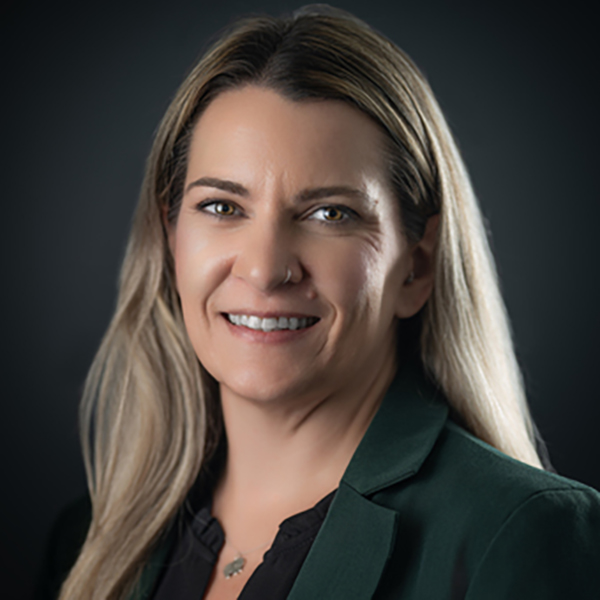
With over 17 years of experience advising expatriates and internationally mobile individuals, Ben specialises in helping clients make sense of complex, cross-border financial lives. His career has taken him through major global financial centres including Dubai, Singapore, and New York City, before establishing his practice in Houston, Texas, where he now works closely with clients navigating life and finances in the United States.
Ben’s work centres on individuals and families whose assets, pensions, and financial obligations span multiple jurisdictions. He has developed particular expertise supporting clients who now reside in the U.S. but retain UK pension assets — an area that often requires careful coordination across regulatory, tax, and long-term planning considerations. From this foundation, Ben helps clients bring together their U.S. and worldwide assets into a single, coherent financial plan aligned with their long-term objectives.
Throughout his career, Ben has been known for his ability to bring structure and clarity to complex situations. He works closely with clients to define goals, organise assets efficiently, and make informed decisions across investment management, retirement planning, and estate considerations. His approach is methodical, pragmatic, and focused on helping clients understand not just what they are doing, but why.
Ben holds a Master’s degree in Finance from Heriot-Watt University and brings a global perspective shaped by advising clients across multiple regulatory environments and stages of life. His experience allows him to anticipate issues before they arise and to design financial strategies that remain robust as clients’ circumstances evolve over time.
Ben works with clients seeking clarity around:


Yes. The U.S. taxes its citizens on worldwide income regardless of where they live. Even if you pay taxes in your country of residence, you are still required to file a U.S. federal tax return each year. Provisions like the Foreign Earned Income Exclusion and Foreign Tax Credit can reduce double taxation, but they must be applied correctly. Failing to file — or filing incorrectly — can result in serious penalties.
This is a specialist area that most advisers on either side of the Atlantic are not equipped to handle. Options include leaving the pension in place and drawing it at retirement, or exploring how it integrates into your wider U.S. financial plan. The right answer depends on your pension type, residency situation, long-term goals, and how the U.S.-UK tax treaty applies to you. Getting this wrong is costly — early, specialist advice matters.
It depends on the account type and where you are moving. Many U.S. brokerages restrict or close accounts for non-U.S. residents, particularly in FATCA-covered countries. IRAs and 401(k)s are generally more straightforward to retain than taxable accounts. The key is reviewing your accounts before you move, not after — so nothing gets caught off-guard.
FBAR — the Foreign Bank Account Report — requires U.S. persons to report foreign financial accounts if the aggregate value exceeds $10,000 at any point during the year. This covers bank accounts, brokerage accounts, and certain other overseas financial accounts. Penalties for non-compliance are severe, even for unintentional failures. If you hold assets outside the U.S., FBAR and FATCA compliance should be built into your financial plan from the outset.
RSUs can create significant and unexpected tax exposure when you vest and sell across different countries. Multiple tax authorities may have a claim depending on where you were resident at grant, vesting, and sale. Without planning, you can face tax bills in jurisdictions you didn't anticipate. I help clients map the tax treatment across relevant countries and build a strategy around timing, residency, and disposal to minimise unnecessary liability.
Not necessarily. In many cases, retaining your U.S. retirement accounts is the right approach. Rolling over to a foreign scheme can trigger immediate U.S. tax consequences, and not all foreign vehicles are recognised under U.S. tax treaties. The decision depends on the tax implications in both countries, your long-term retirement plan, and whether you may return to the U.S. This should be decided within your full financial picture — not in isolation.
Closely, and by design. Cross-border financial planning and tax advice are deeply connected, and I work collaboratively with clients' existing accountants and tax advisers wherever they are based. Where the right tax support isn't yet in place, I can help identify what's needed. My role is to ensure the financial plan and the tax strategy are fully aligned — because a plan that creates an unintended tax consequence is not a good plan.
Most advisers work within a single country's framework. That breaks down quickly when your life spans more than one. Cross-border planning means understanding how different tax systems interact, how retirement assets from one country are treated in another, and how to build a strategy that remains sound as your residency or circumstances change. It requires different expertise, different professional relationships, and a different approach. That is the work I do.
Non-U.S. individuals with U.S. assets face rules that are often poorly understood. U.S. estate tax applies to U.S.-sited assets held by non-resident aliens — at a much lower exemption threshold than for U.S. citizens. There are also withholding tax rules on certain U.S. investment income and FATCA reporting obligations to consider. I work with non-U.S. individuals to ensure their U.S. assets are structured appropriately and their wider plan accounts for the cross-border dimension.
I work on a transparent, agreed fee basis with no product commissions or hidden incentives. The structure depends on the nature of the engagement — some clients work with me on a one-time planning basis, others retain me for ongoing advice and investment management. Fees are discussed openly at the outset so you know exactly what to expect before we begin.
Returning to the U.S. is one of the most planning-intensive transitions you can make — and preparation well in advance makes a significant difference. Key areas include reviewing foreign pension and retirement assets, restructuring any foreign investments that may be inefficient under U.S. rules, and ensuring your overall plan is positioned for U.S.-based life. I work with clients in the one to three years before a planned return to make the transition as clean and efficient as possible.
If your financial life is entirely contained within one country, a domestic adviser will serve you well. But if you are a U.S. citizen or green card holder living abroad, hold pension or retirement assets in more than one country, receive cross-border equity compensation, or are planning an international relocation — a specialist is worth seeking out. The cost of getting cross-border planning wrong almost always far exceeds the cost of getting the right advice from the start.